2020
List of EOVSA Flares with Spectrogram Data
June
Date |
Time (UT) |
GOES Class |
Position |
Spectrogram |
STIX Coverage |
AIA Movie |
EOVSA Images |
Comment |
|---|---|---|---|---|---|---|---|---|
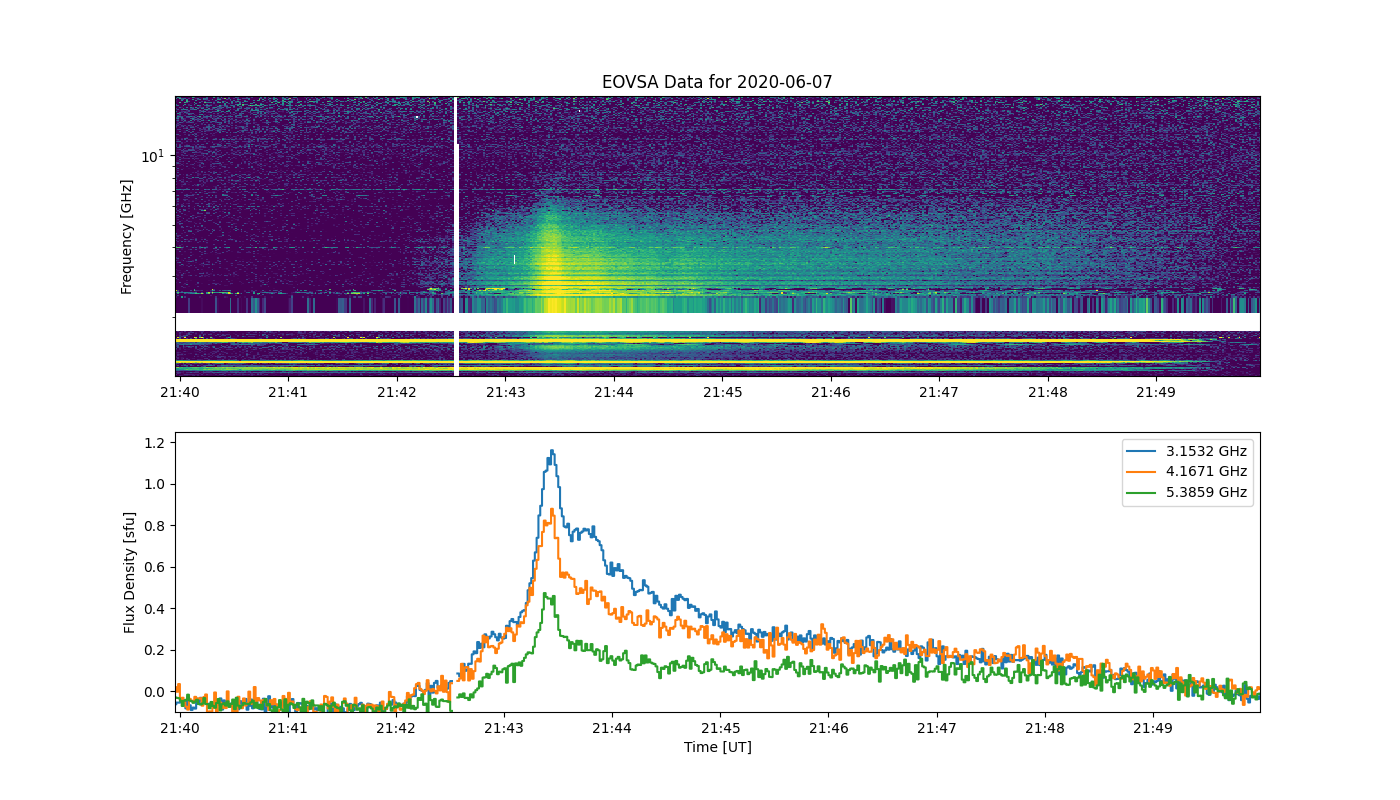
21:43 |
B6.4 |
|||||||
October
Date |
Time (UT) |
GOES Class |
Position |
Spectrogram |
STIX Coverage |
AIA Movie |
EOVSA Images |
Comment |
|---|---|---|---|---|---|---|---|---|
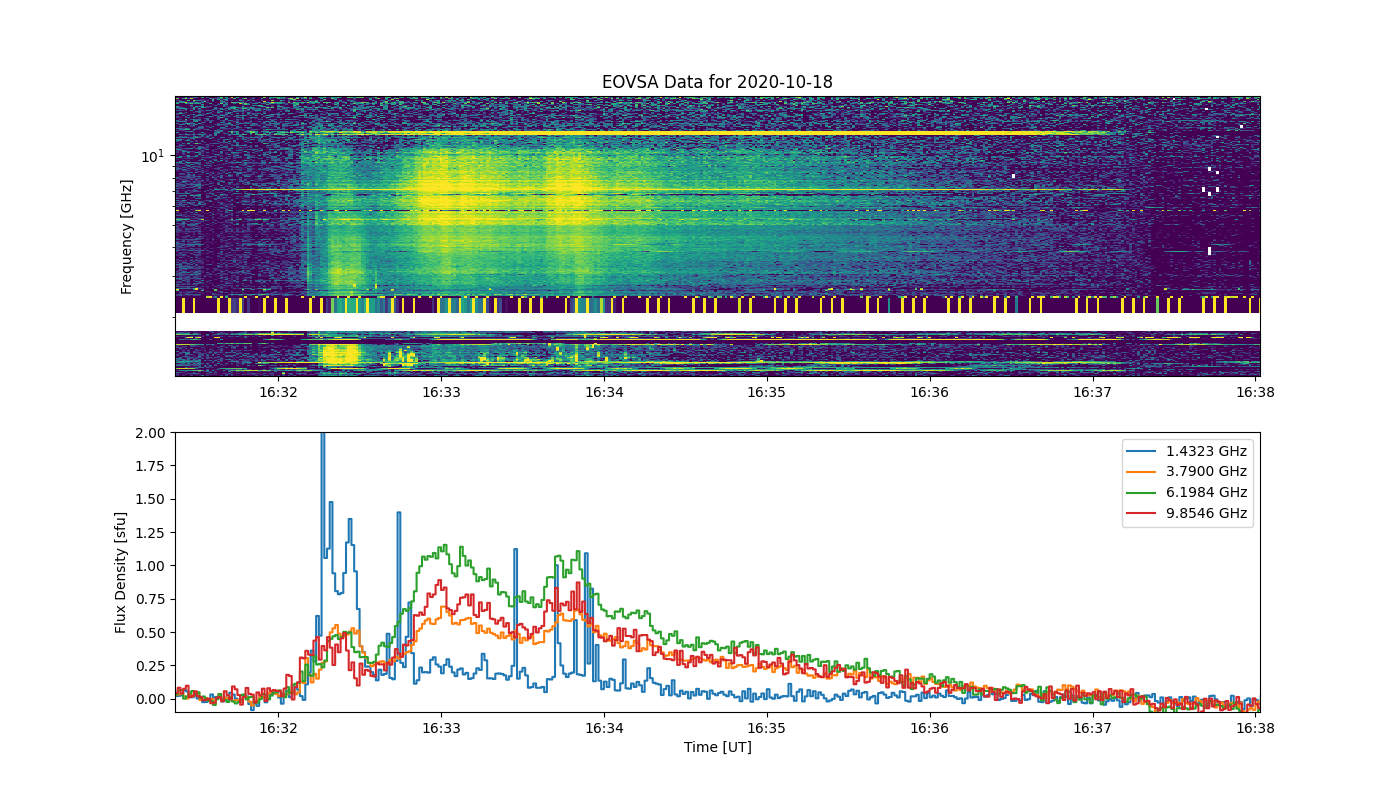
16:33 |
B2.0 |
NA |
||||||
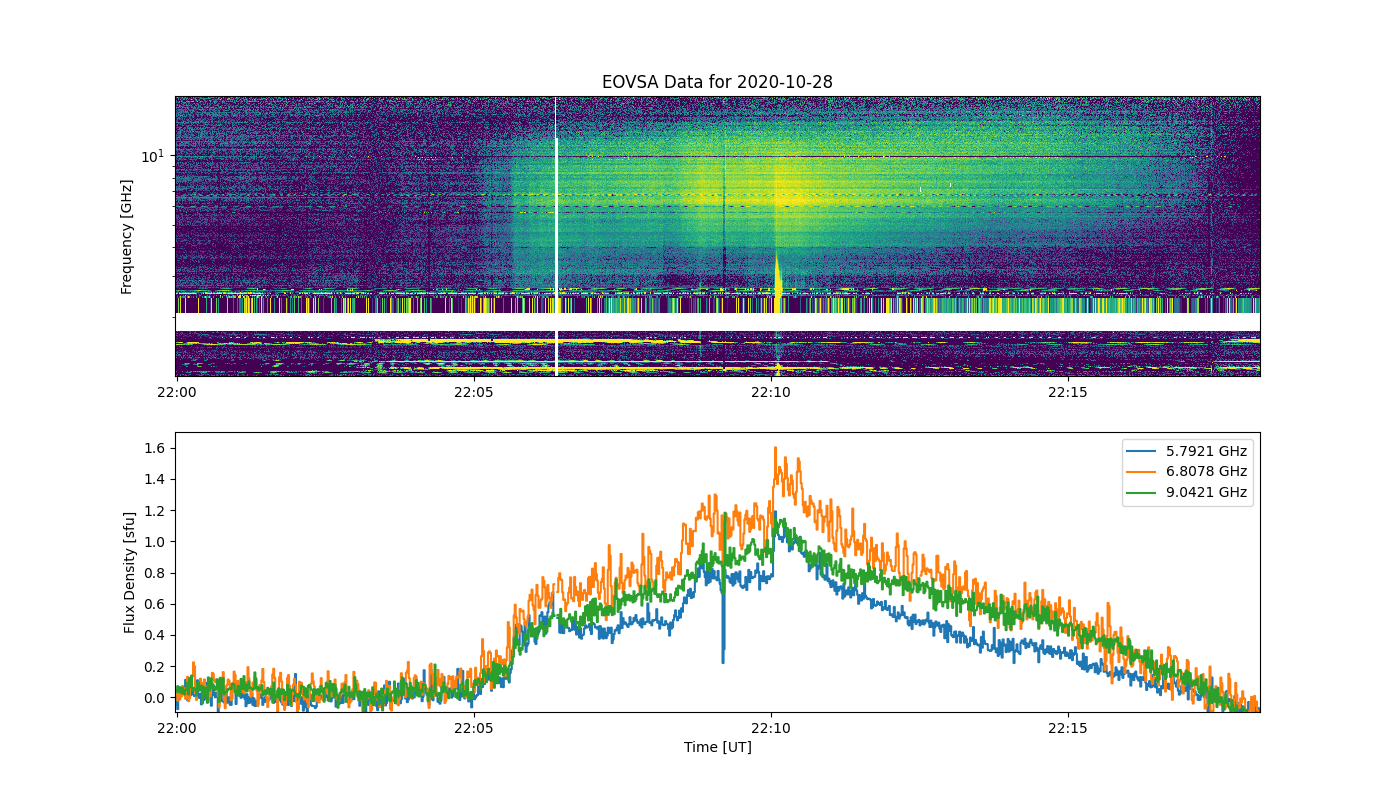
22:10 |
C1.5 |
NA |
||||||
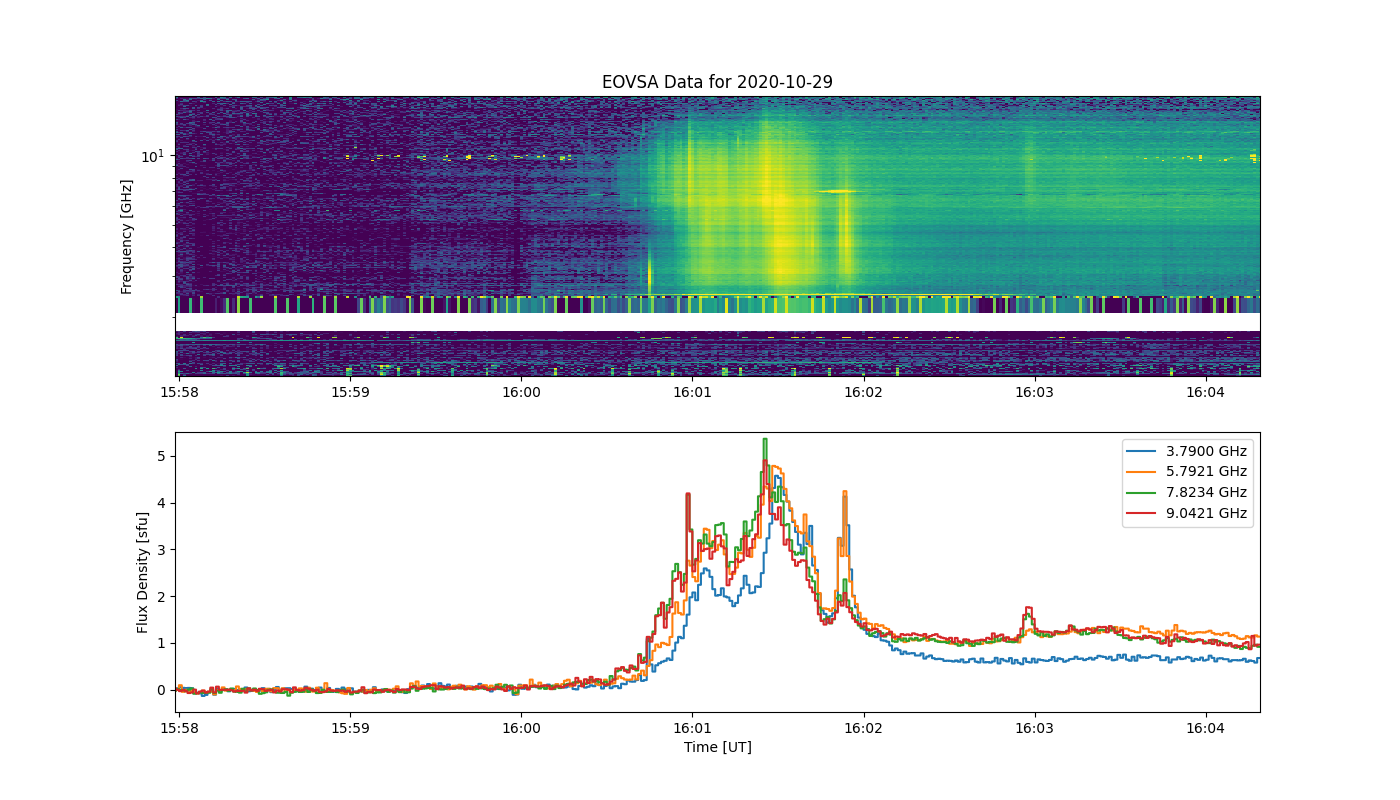
16:01 |
C1.3 |
S17 W41 |
NA |
|||||
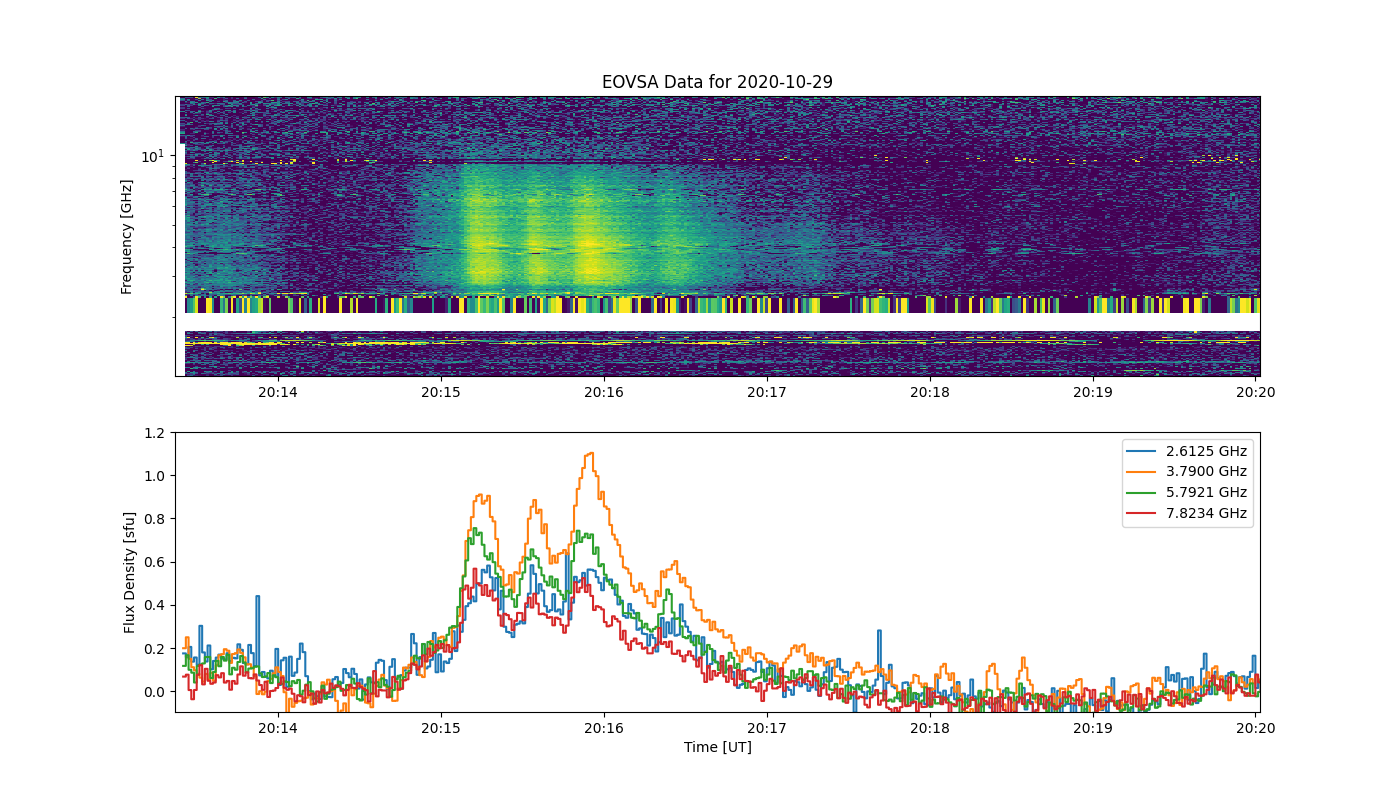
20:16 |
C1.5 |
S17 W43 |
NA |
|||||
November
Date |
Time (UT) |
GOES Class |
Position |
Spectrogram |
STIX Coverage |
AIA Movie |
EOVSA Images |
Comment |
|---|---|---|---|---|---|---|---|---|
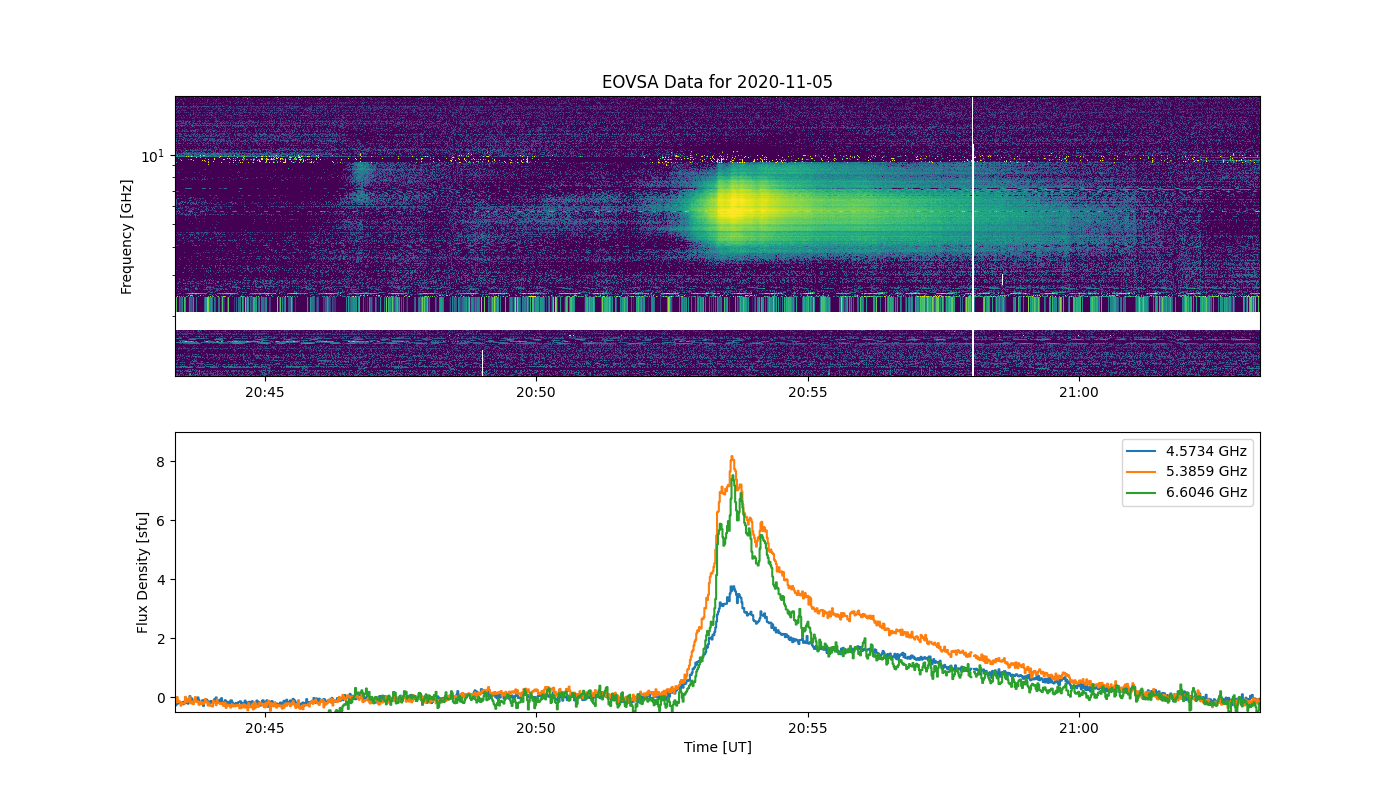
20:53 |
B7.0 |
NA |
||||||
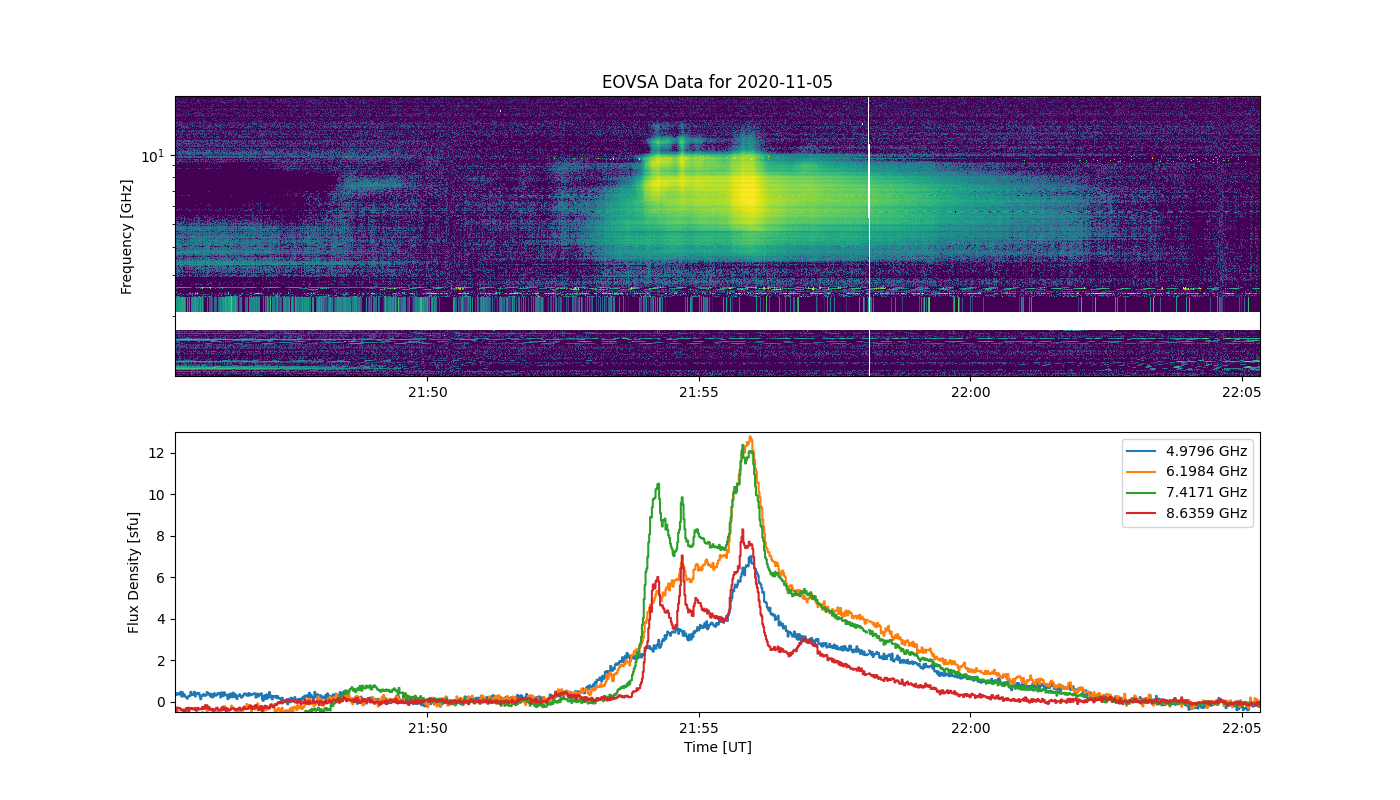
21:55 |
B9.0 |
NA |
||||||
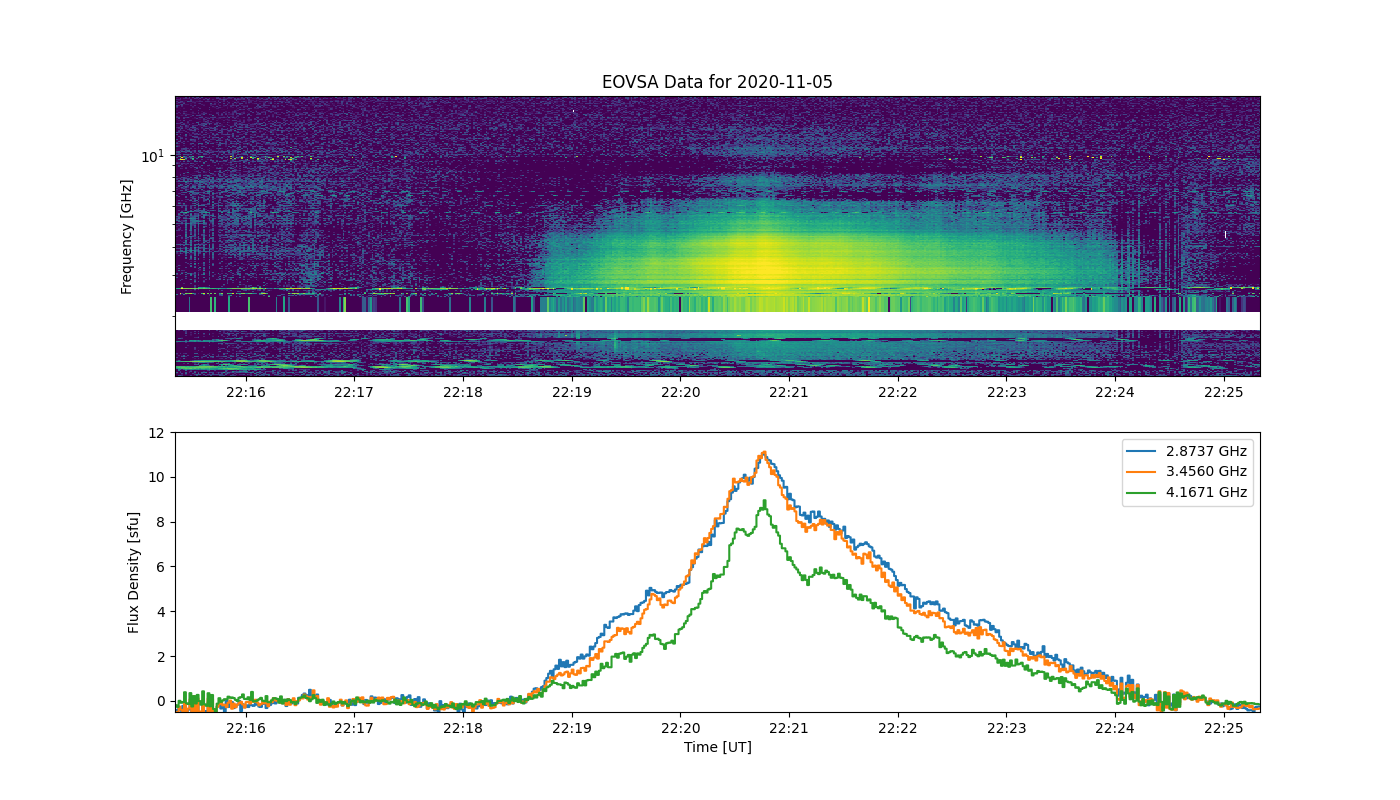
22:20 |
C1.0 |
NA |
||||||
22:40 |
B7.0 |
NA |
||||||
16:13 |
B4.6 |
NA |
||||||
21:47 |
B2.8 |
NA |
AIA? |
|||||
16:24 |
B3.4 |
NA |
||||||
19:26 |
B4.4 |
NA |
||||||
19:44 |
C1.3 |
S24 W20 |
NA |
|||||
17:00 |
C1.9 |
S22 E39 |
||||||
16:40 |
B5.0 |
NA |
AIA? |
|||||
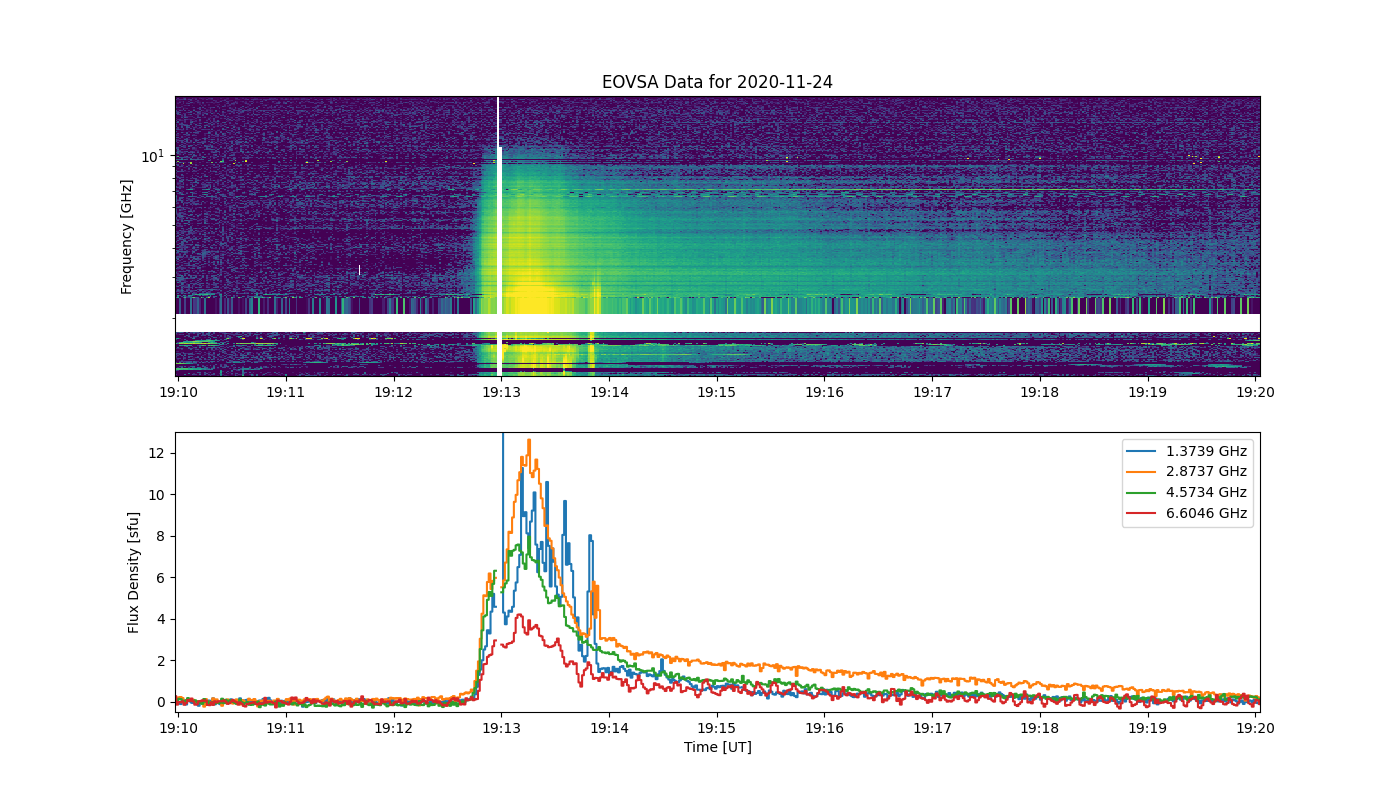
19:13 |
B5.4 |
NA |
||||||
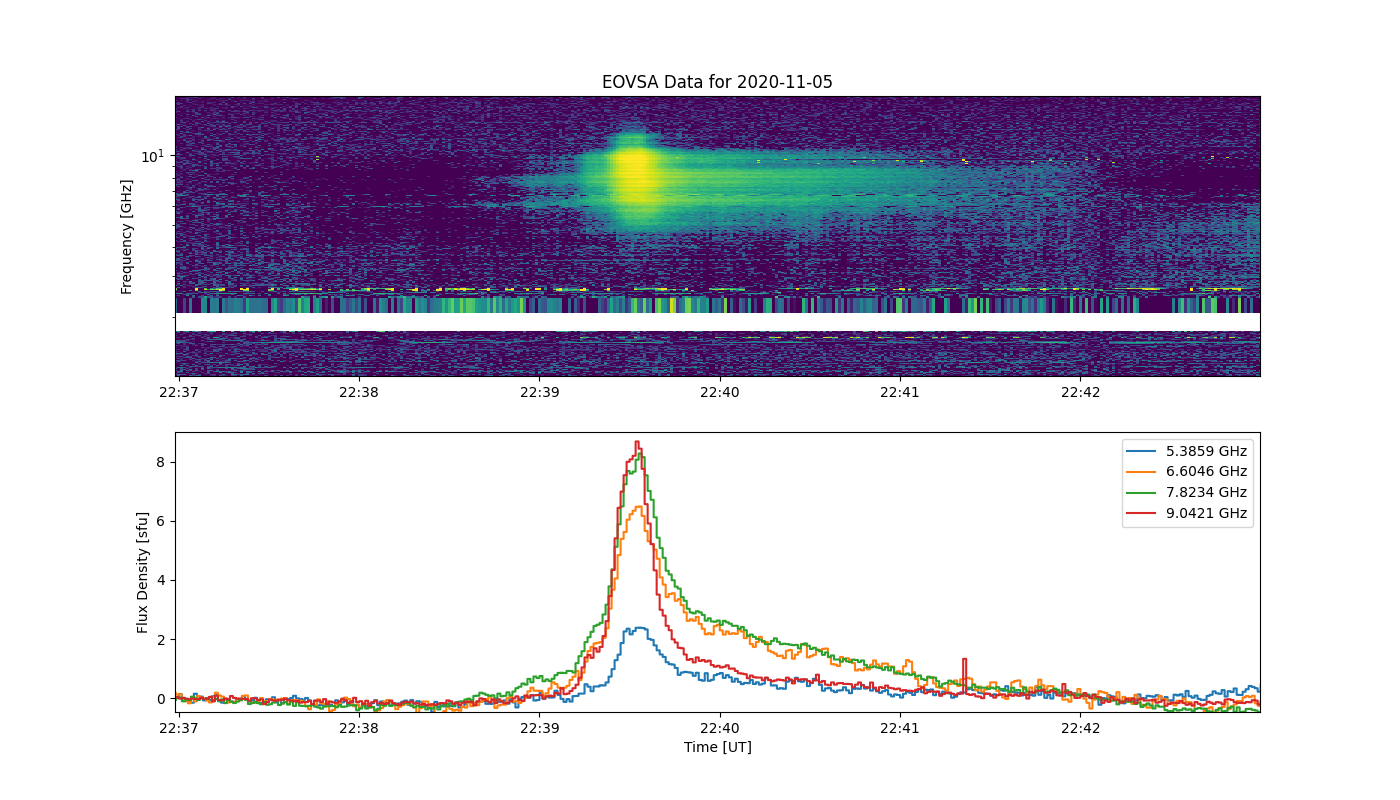
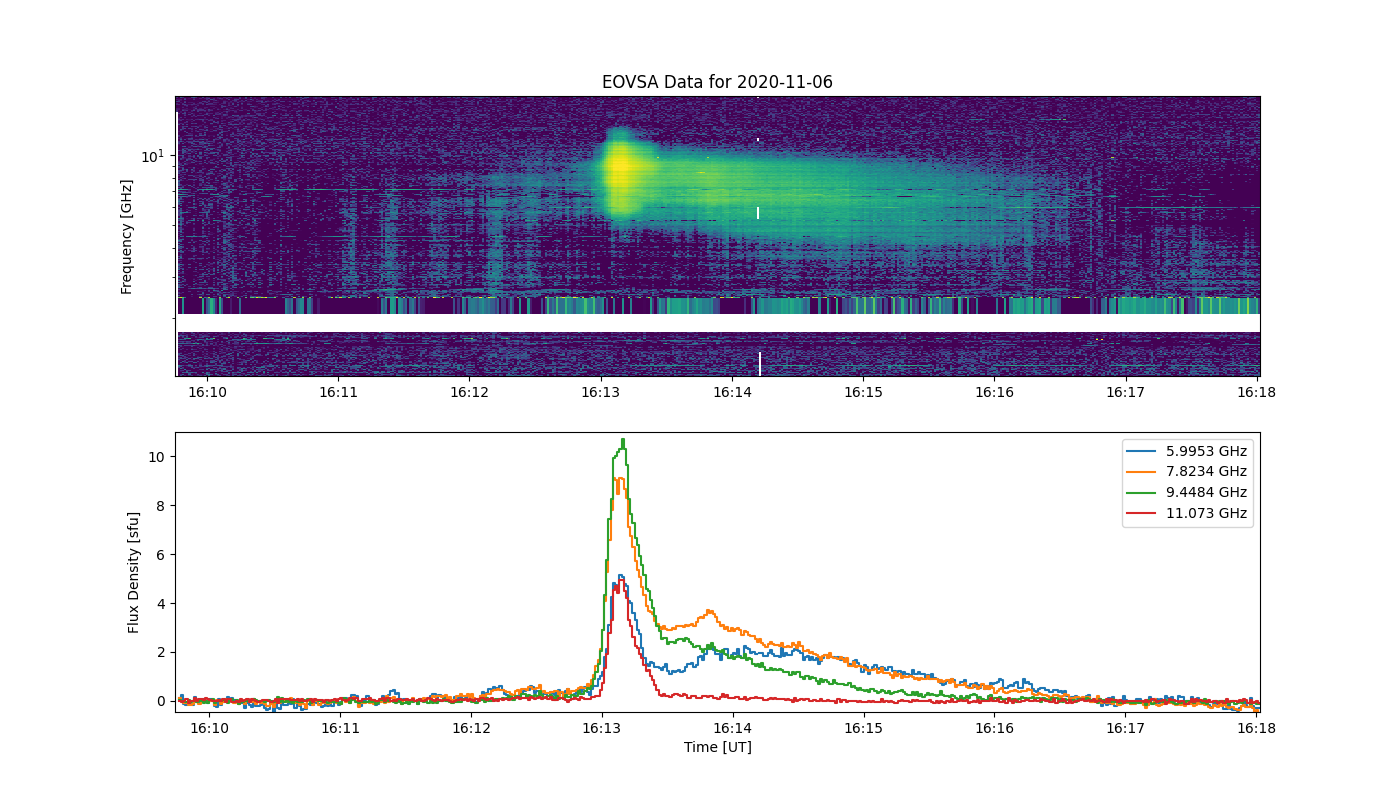
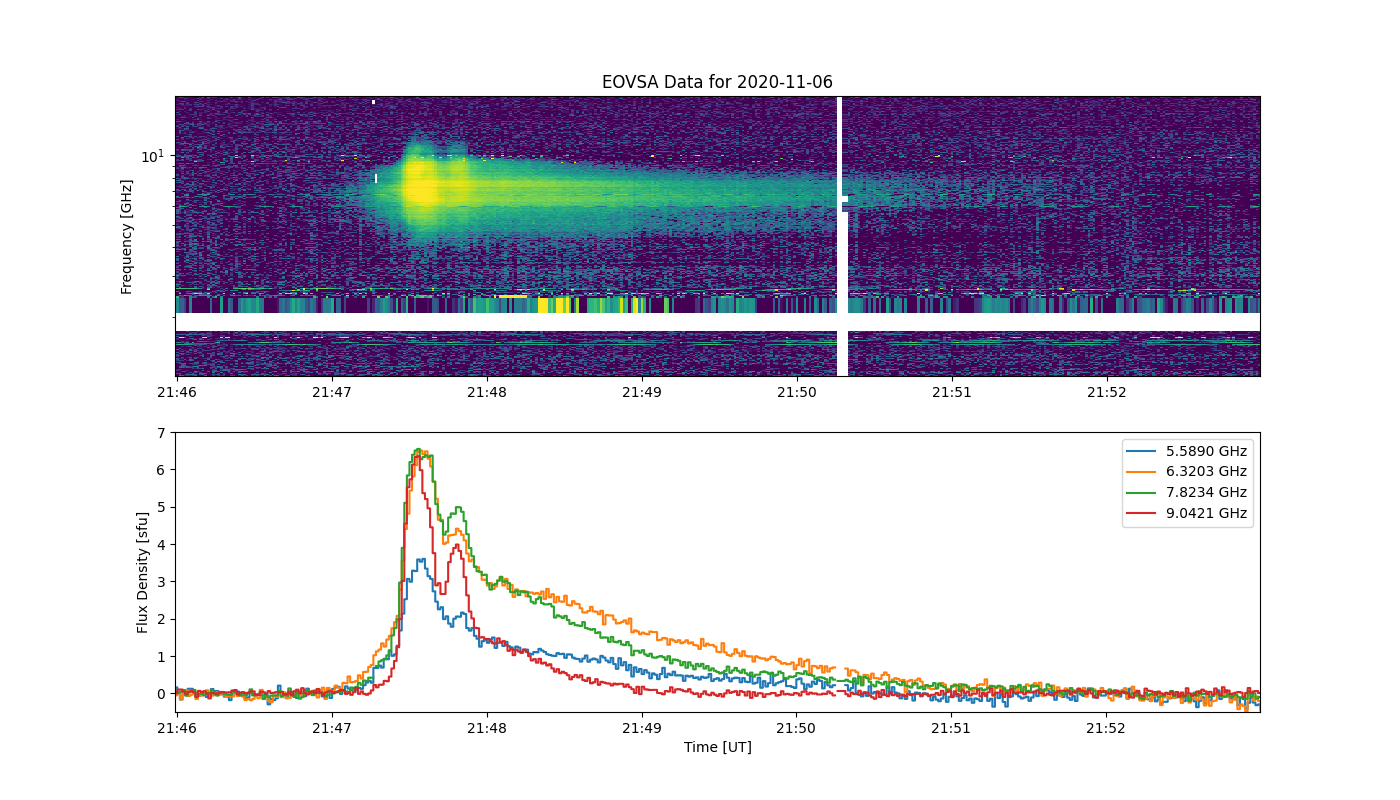
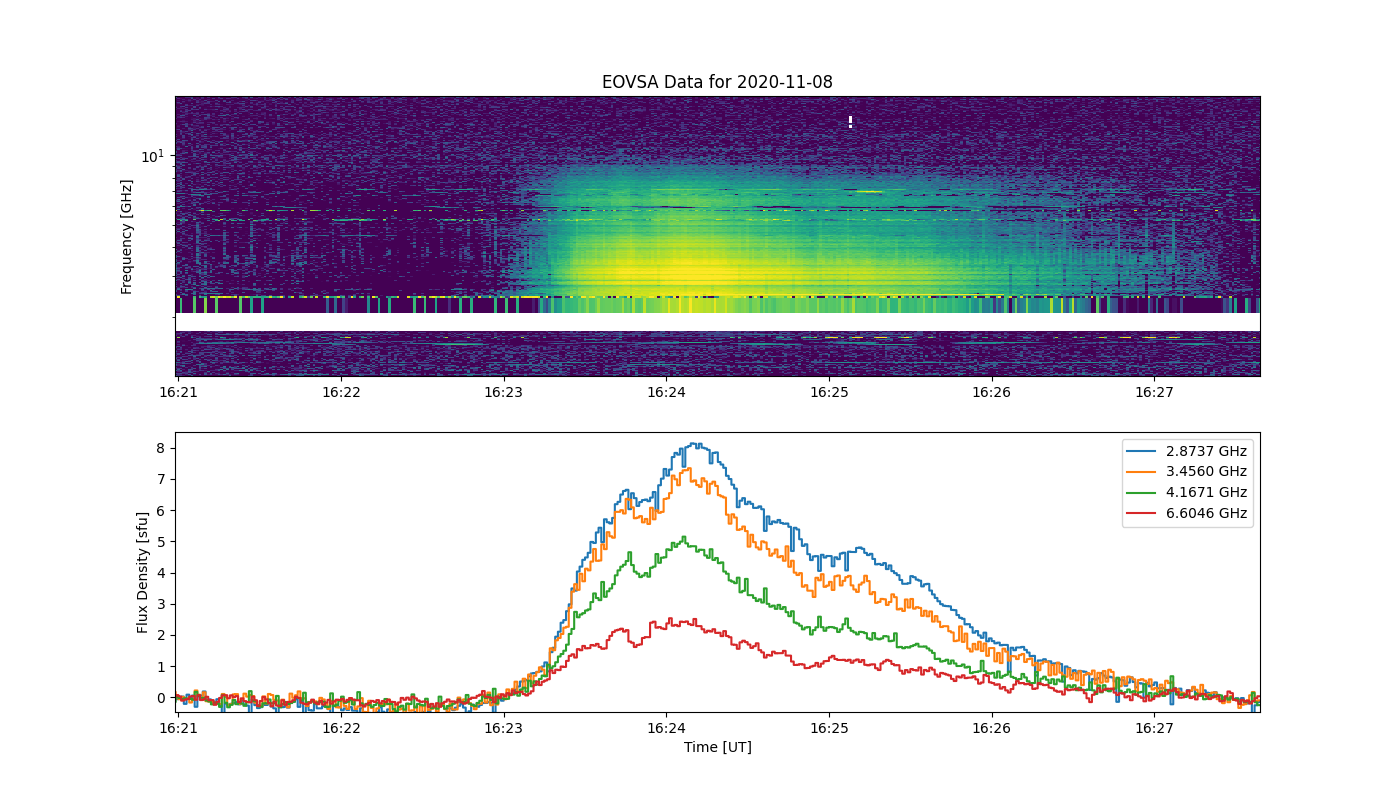
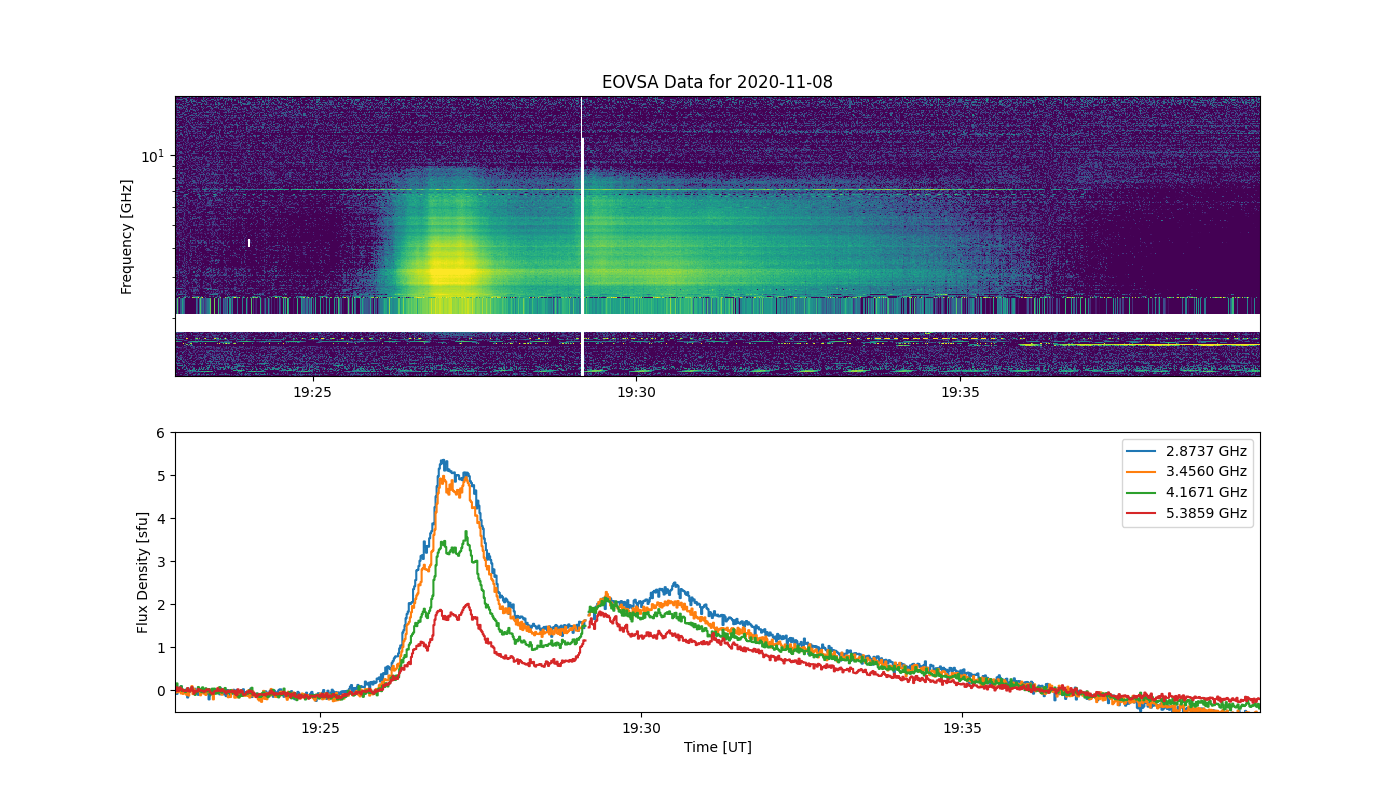
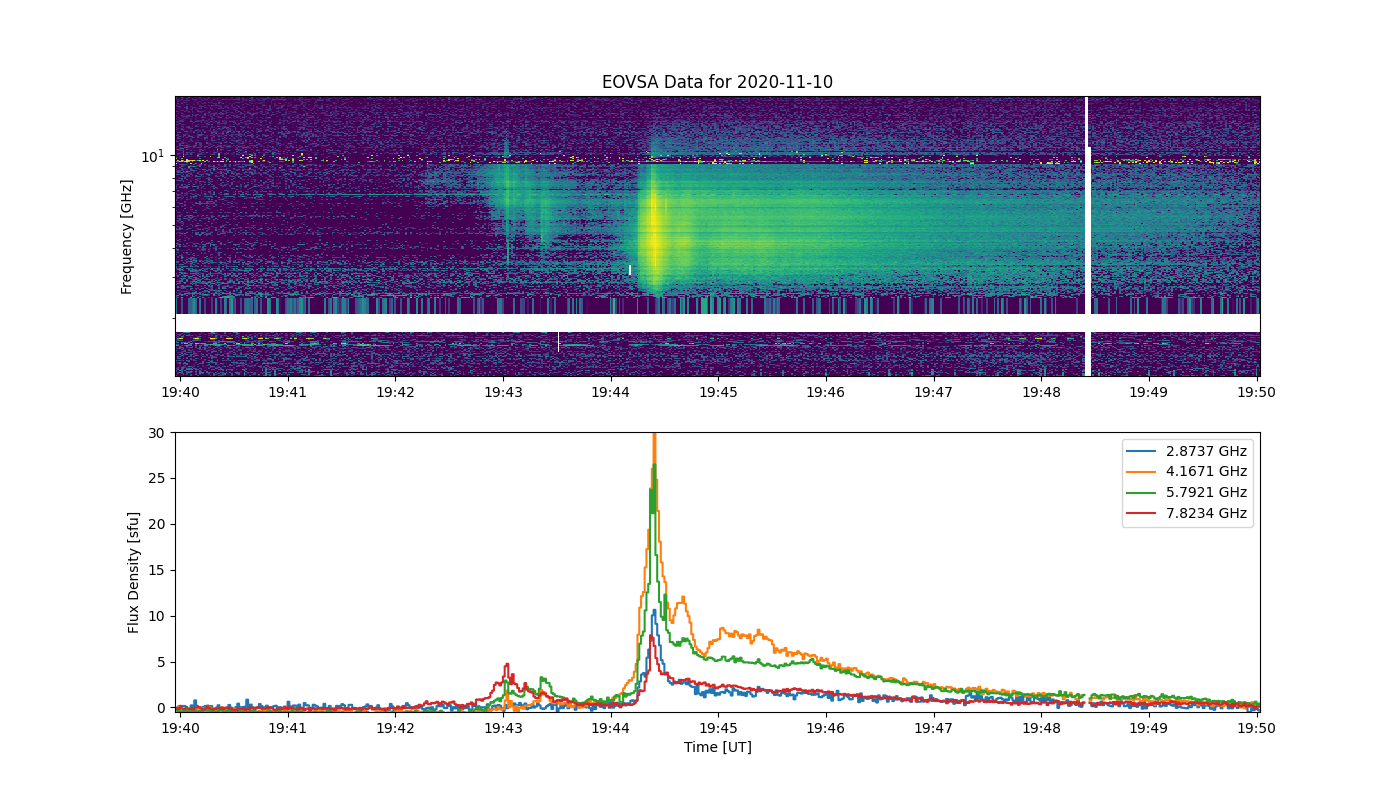
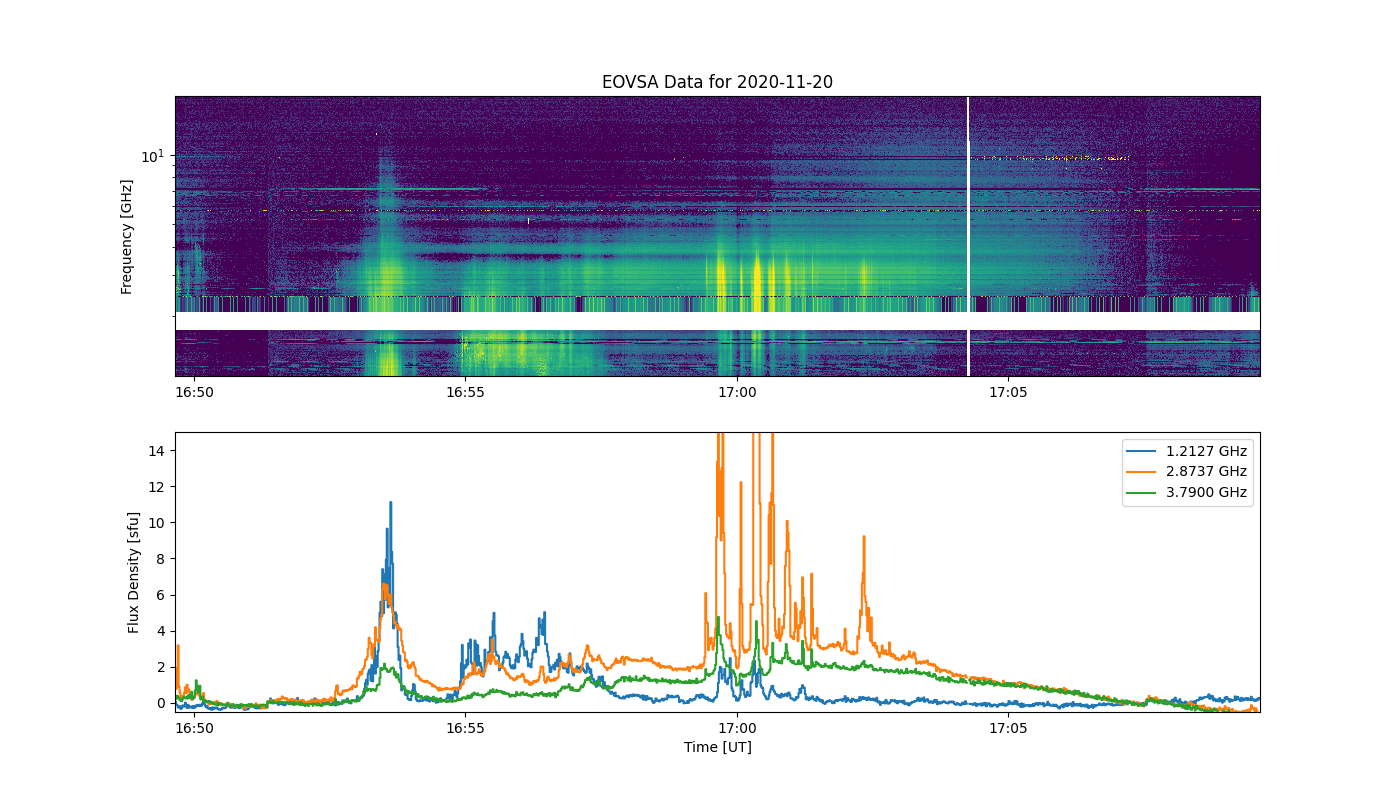
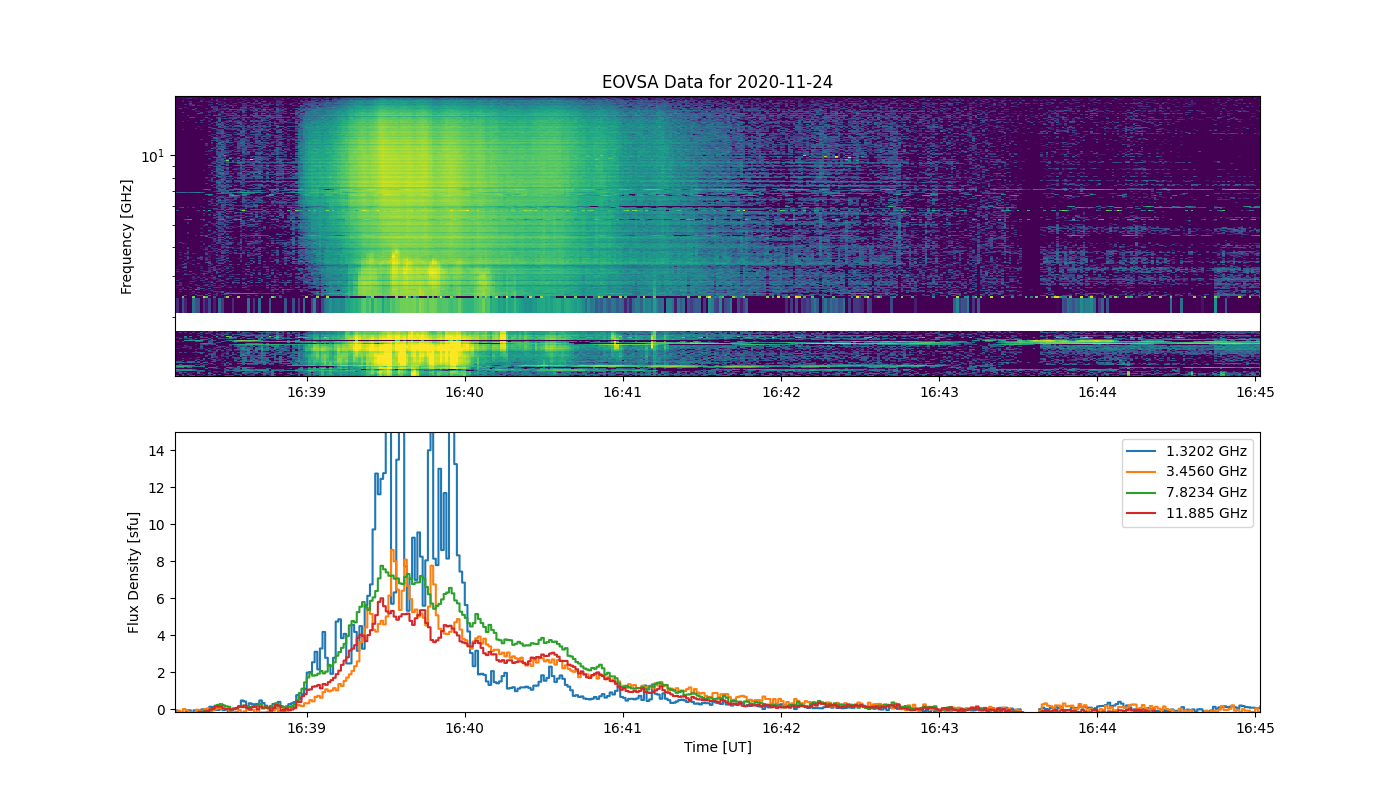
December
Date |
Time (UT) |
GOES Class |
Position |
Spectrogram |
STIX Coverage |
AIA Movie |
EOVSA Images |
Comment |
|---|---|---|---|---|---|---|---|---|
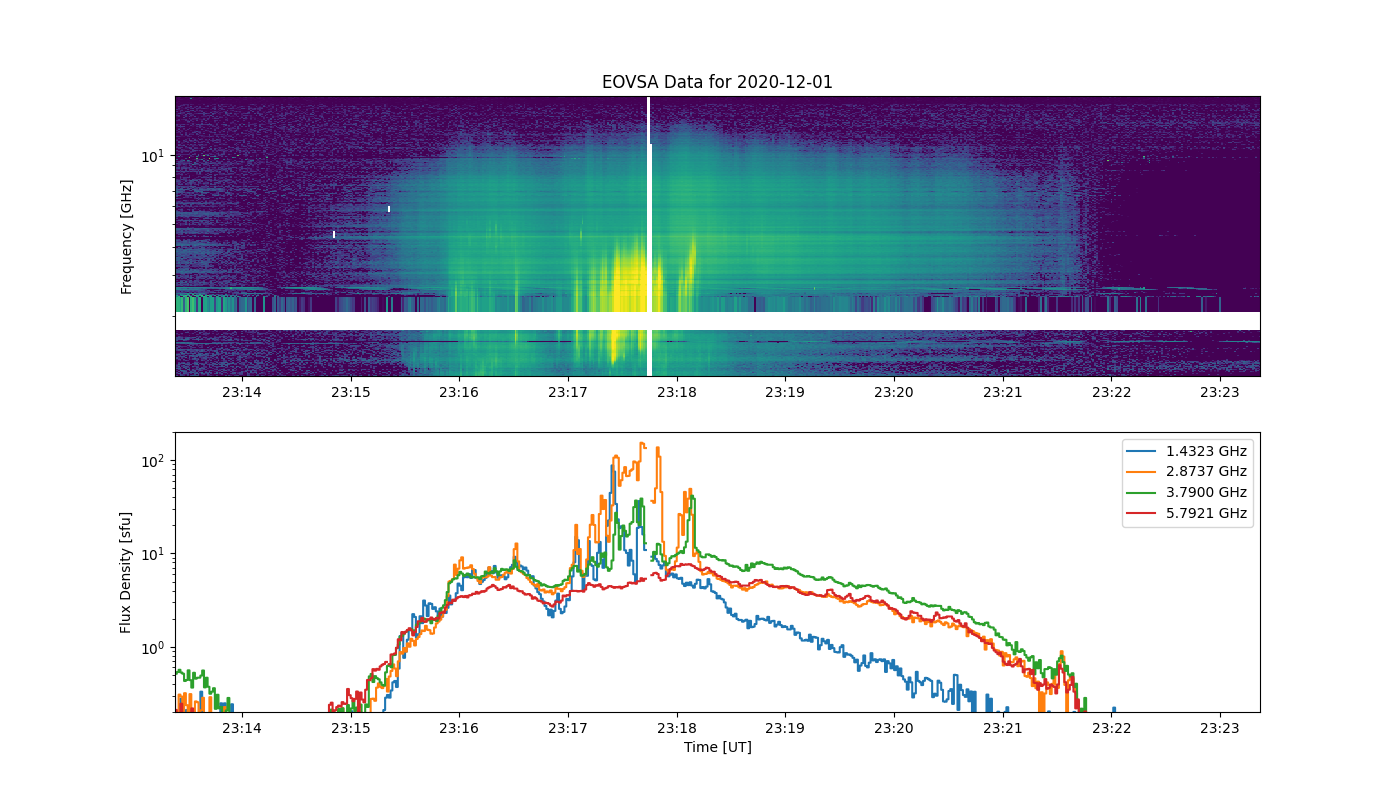
23:17 |
C1.4 |
S15 W26 |
NA |
|||||
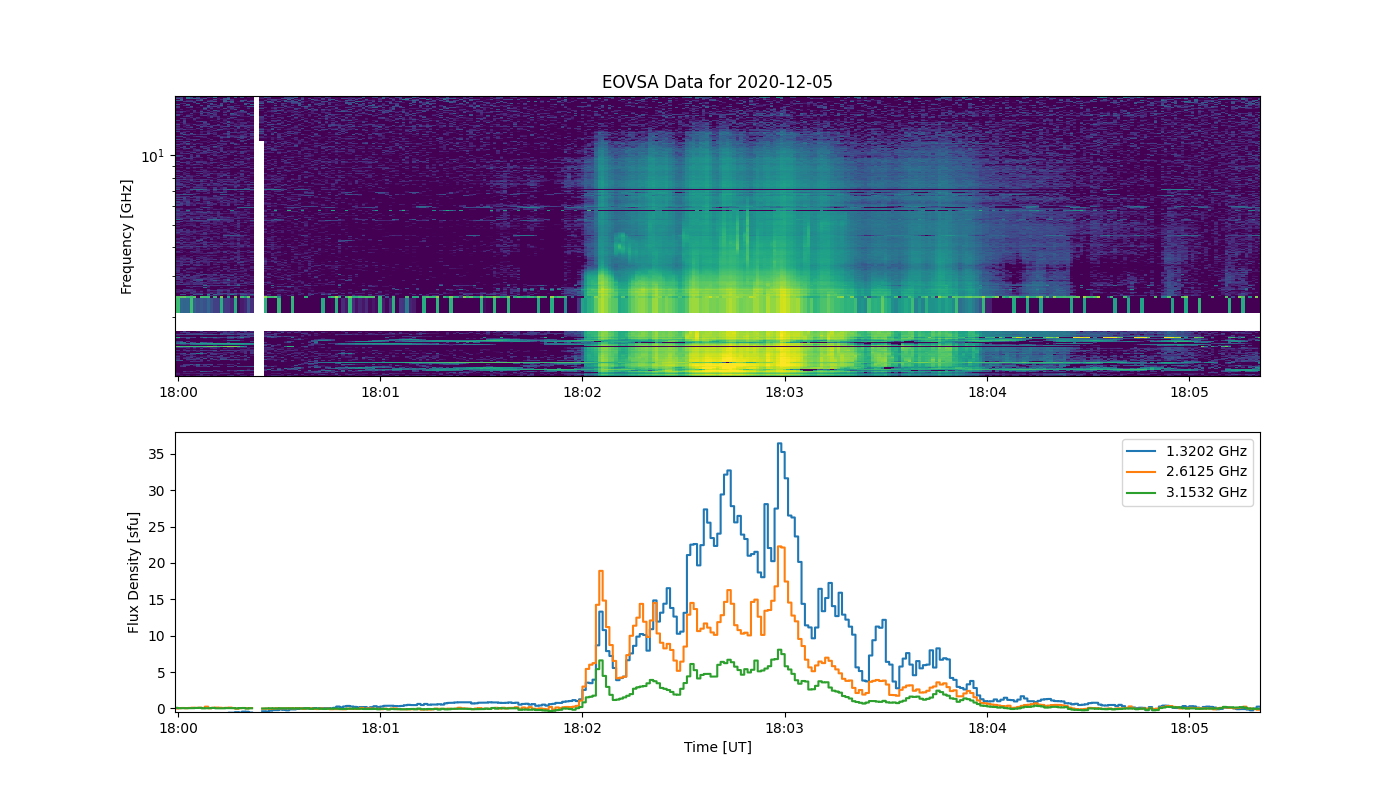
18:03 |
C1.2 |
S24 E18 |
NA |
|||||
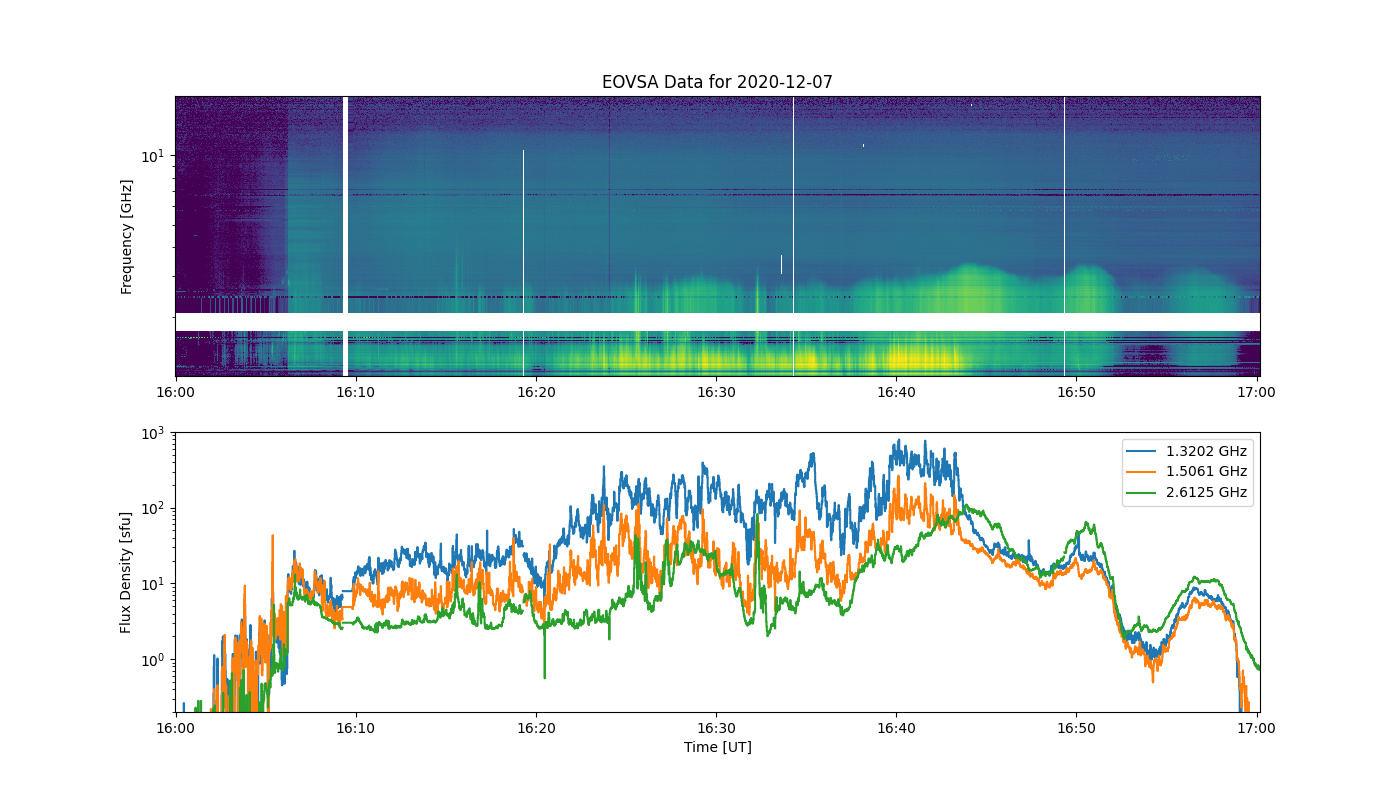
16:40 |
C7.4 |
S25 W08 |
NA |
|||||
Python code to read plotdata file
from __future__ import print_function
def rd_datfile(file):
    ''' Read EOVSA binary spectrogram file and return a dictionary with times
        in Julian Date, frequencies in GHz, and cross-power data in sfu.

        Return Keys:
          'time'     Numpy array of nt times in JD format
          'fghz'     Numpy array of nf frequencies in GHz
          'data'     Numpy array of size [nf, nt] containing cross-power data

        Returns empty dictionary ({}) if file size is not compatible with inferred dimensions
    '''
    import struct
    import numpy as np
    def dims(file):
        # Determine time and frequency dimensions (assumes the file has fewer than 10000 times)
        f = open(file,'rb')
        tmp = f.read(83608)  # max 10000 times and 451 frequencies
        f.close()
        nbytes = len(tmp)
        tdat = np.array(struct.unpack(str(int(nbytes/8))+'d',tmp[:nbytes]))
        nt = np.where(tdat < 2400000.)[0]
        nf = np.where(np.logical_or(tdat[nt[0]:] > 18, tdat[nt[0]:] < 1))[0]
        return nt[0], nf[0]
    nt, nf = dims(file)
    f = open(file,'rb')
    tmp = f.read(nt*8)
    times = struct.unpack(str(nt)+'d',tmp)
    tmp = f.read(nf*8)
    fghz = struct.unpack(str(nf)+'d',tmp)
    tmp = f.read()
    f.close()
    if len(tmp) != nf*nt*4:
        print('File size is incorrect for nt=',nt,'and nf=',nf)
        return {}
    data = np.array(struct.unpack(str(nt*nf)+'f',tmp)).reshape(nf,nt)
    return {'time':times, 'fghz':fghz, 'data':data}
IDL code to read plotdata file
function rd_datfile,file
    ; Read EOVSA binary spectrogram file and return a structure with times
    ; in Julian Date, frequencies in GHz, and cross-power data in sfu.
    ;
    ; Return tags:
    ;      'time'     Array of nt times in JD format
    ;      'fghz'     Array of nf frequencies in GHz
    ;      'data'     Array of size [nf, nt] containing cross-power data
    ;
    ;    Returns empty dictionary ({}) if file size is not compatible with inferred dimensions
    openr,/get_lun,lun,file
    tmp = dblarr(10451)
    readu,lun,tmp
    free_lun,lun
    nt = (where(tmp lt 2400000.))[0]
    nf = (where(tmp[nt[0]:*] gt 18 or tmp[nt[0]:*] lt 1))[0]
    times = dblarr(nt)
    fghz = dblarr(nf)
    data = fltarr(nt, nf)
    openr,/get_lun,lun,file
    readu,lun,times
    readu,lun,fghz
    readu,lun,data
    free_lun,lun
    data = create_struct('time',times,'fghz',fghz,'data',transpose(data))
    return, data
    end
Migrated from MediaWiki page 2020, latest revision 8707 (2024-03-29T12:39:20Z).