OVSA Science Highlights
For Authors
We welcome submissions for all works that utilize OVSA data. Please see the Author Guidelines for submission guidance. Here is a Google Doc template based on a published OVSA highlight.
All Highlights
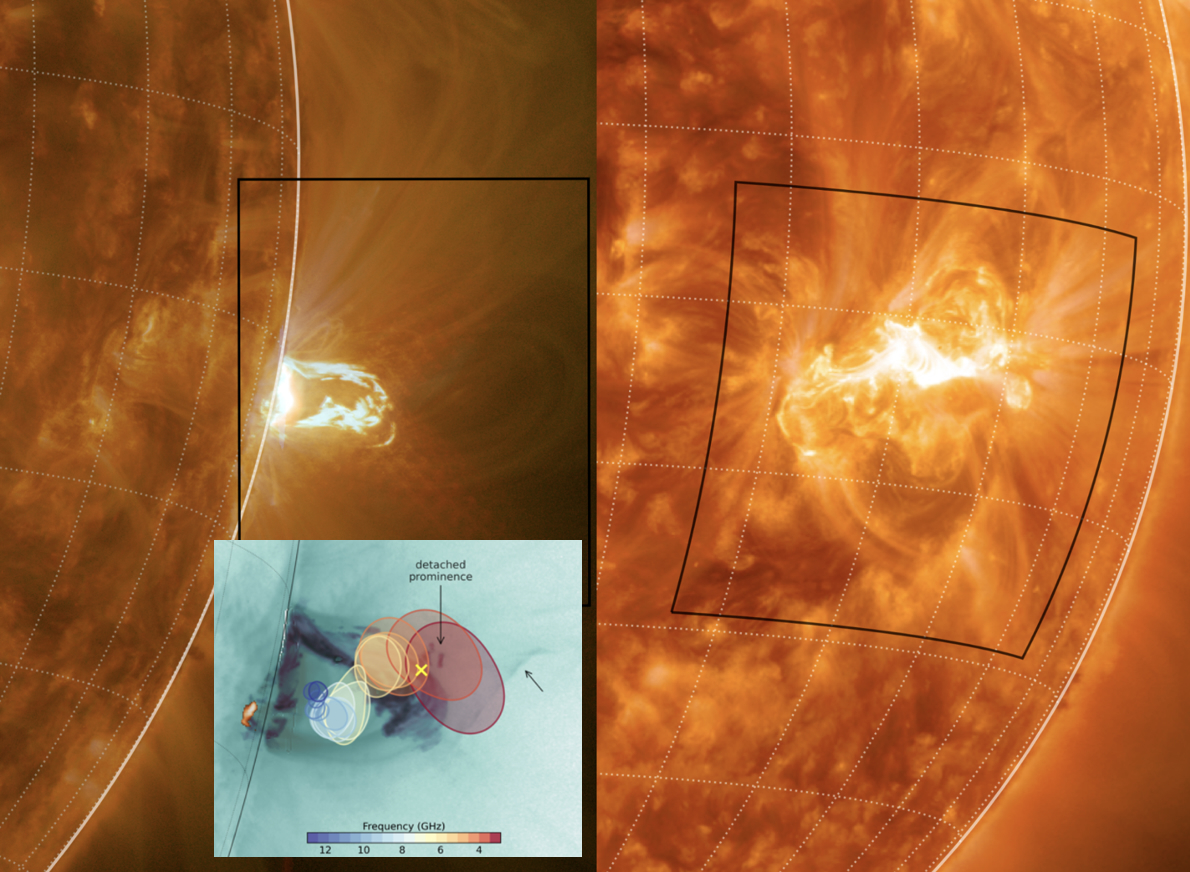
EOVSA imaged two coherent microwave bursts from energetic electrons near the front of a rising magnetic flux rope. Together with multiwavelength observations, the radio sources support a picture in which magnetic erosion and strong overlying fields helped halt the eruption. [Contributed by Tingyu Gou (Center for Astrophysics | Harvard & Smithsonian); Edited by Sijie Yu. Posted on August 15, 2026.]
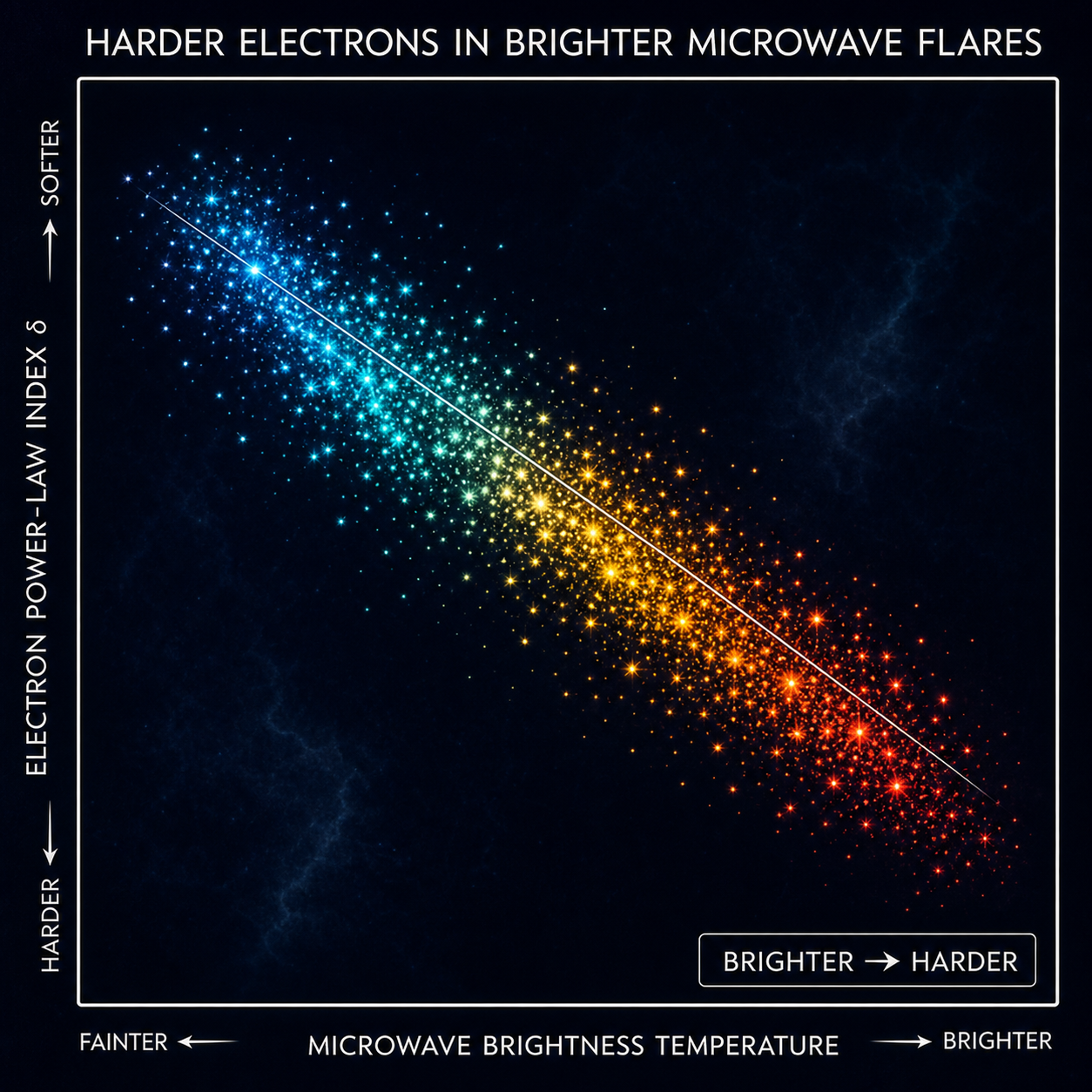
A study of 12 EOVSA microwave flares finds that brighter sources consistently contain harder populations of mildly relativistic electrons. The tight, nearly simultaneous relation links microwave intensity directly to the evolving electron spectrum. [Contributed by Gregory D. Fleishman (New Jersey Institute of Technology); Edited by Sijie Yu. Posted on August 14, 2026.]
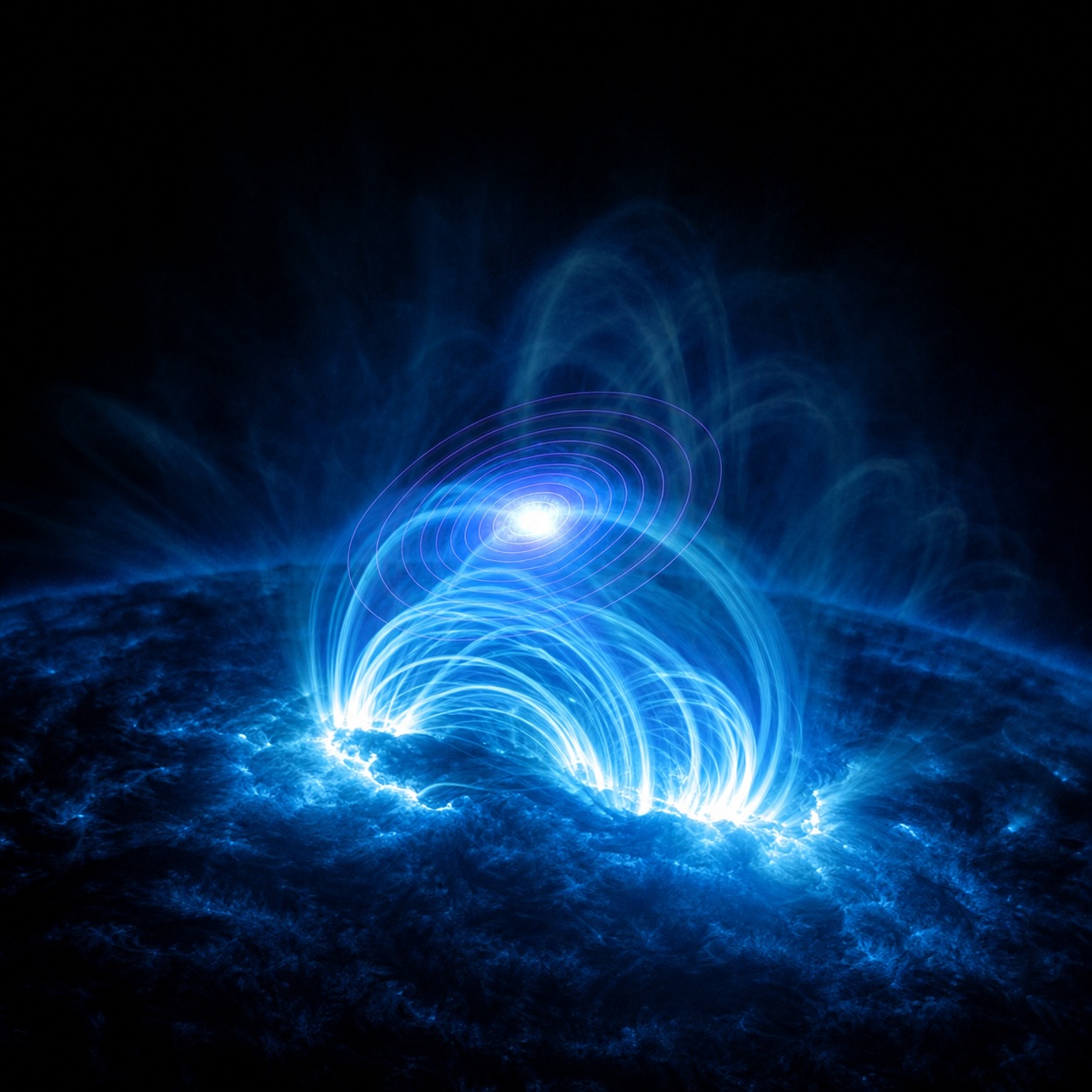
Using EOVSA microwave imaging spectroscopy, researchers mapped the rapidly weakening coronal magnetic field in an X-class solar flare and linked it to the rise of energetic electrons in the flare arcade. [Contributed by Gregory D. Fleishman (New Jersey Institute of Technology); Edited by S. Yu. Posted on May 11, 2026.]
Using microwave imaging spectroscopy data from EOVSA combined with in situ measurements, researchers have shed light on the mystery of missing energetic electrons entering interplanetary space [Contributed by Meiqi Wang (New Jersey Institute of Technology); Edited by B. Chen. Posted on April 30, 2026.]
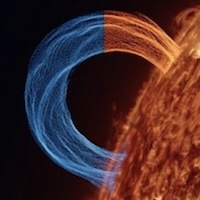
By integrating EOVSA microwave imaging spectroscopy with stereoscopic soft X-ray observations for 3D reconstruction, researchers have measured key plasma parameters in a solar flare arcade. [Contributed by Tatyana Kaltman (Institut für Sonnenphysik (KIS)); Edited by S. Yu. Posted on April 30, 2026.]

A new study published in Nature Astronomy reveals the location and extent of a distinct group of extremely energetic electrons in a large solar flare. Their energies peak at a few million electron volts—several times higher than the rest-mass energy of electrons. [Contributed by Gregory Fleishman (New Jersey Institute of Technology); Edited by B. Chen. Posted on Jan 30, 2026.]
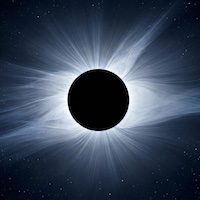
Mysterious weak radio emission is observed by OVRO-LWA in the Sun's middle corona during quiescent times. According to this study, it is produced by nonthermal electrons. [Contributed by Surajit Mondal (New Jersey Institute of Technology); Edited by B. Chen. Posted on Jan 30, 2026.]
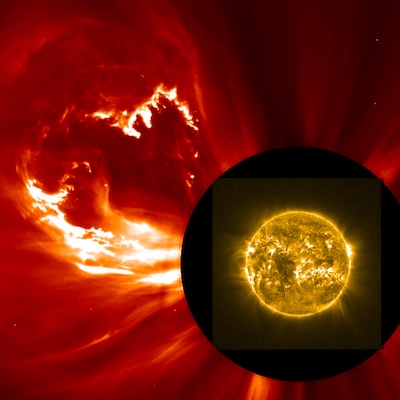
This study reports the first possible detection of thermal gyroresonance emission from a CME. This breakthrough offers a new potential method for measuring the magnetic field of CMEs. [Contributed by Surajit Mondal (New Jersey Institute of Technology); Edited by B. Chen. Posted on September 26, 2025.]
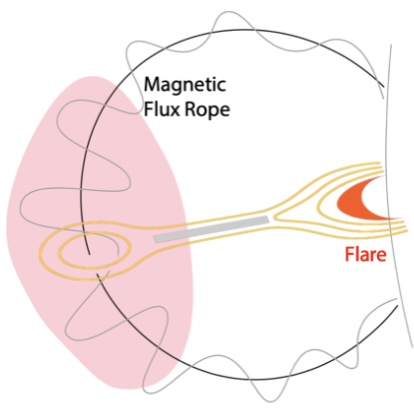
According to this study, the answer is "probably yes." The conclusion is made by using ultrabroadband radio imaging spectroscopy to derive the magnetic field evolution of an erupting CME from the low to middle corona. [Contributed by Xingyao Chen (New Jersey Institute of Technology); Edited by B. Chen. Posted on September 19, 2025.]
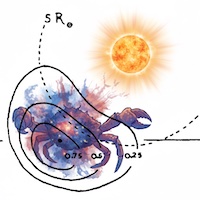
When the Crab Nebula passes behind the Sun each June, radio telescopes can catch its distorted signals, providing a rare way to probe turbulence in the Sun’s extended atmosphere out to more than 10 solar radii. [Contributed by Peijin Zhang (New Jersey Institute of Technology); Edited by B. Chen. Posted on September 11, 2025.]

This study takes advantage of EOVSA's microwave imaging spectroscopy capability and multi-wavelength observations to measure the coronal magnetic field and track the flare energy partitioning. The results show ample magnetic free energy to drive efficient electron acceleration, with the energy deposition of nonthermal electrons alone accounting for the observed thermal response, reinforcing cold flares as clean cases of particle-driven heating. [Contributed by Gregory Fleishman (New Jersey Institute of Technology); Edited by B. Chen. Posted on August 20, 2025.]
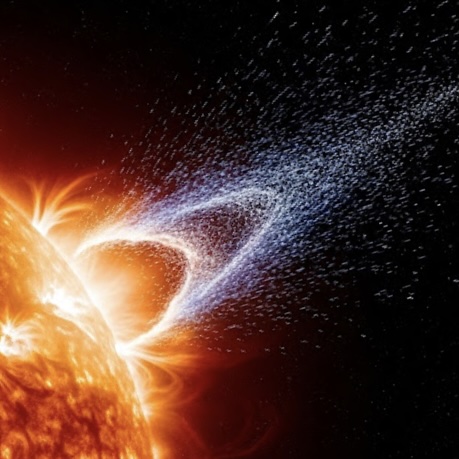
M. Wang et al. analyze a solar energetic particle (SEP) event associated with an eruptive X-class flare and found two distinct impulsive SEP acceleration phases. They are suggested to link to different magnetic reconnection regimes during the eruption, which govern the timing and energy of particles released into interplanetary space. [Contributed by Meiqi Wang (New Jersey Institute of Technology); Edited by B. Chen. Posted on August 19, 2025.]
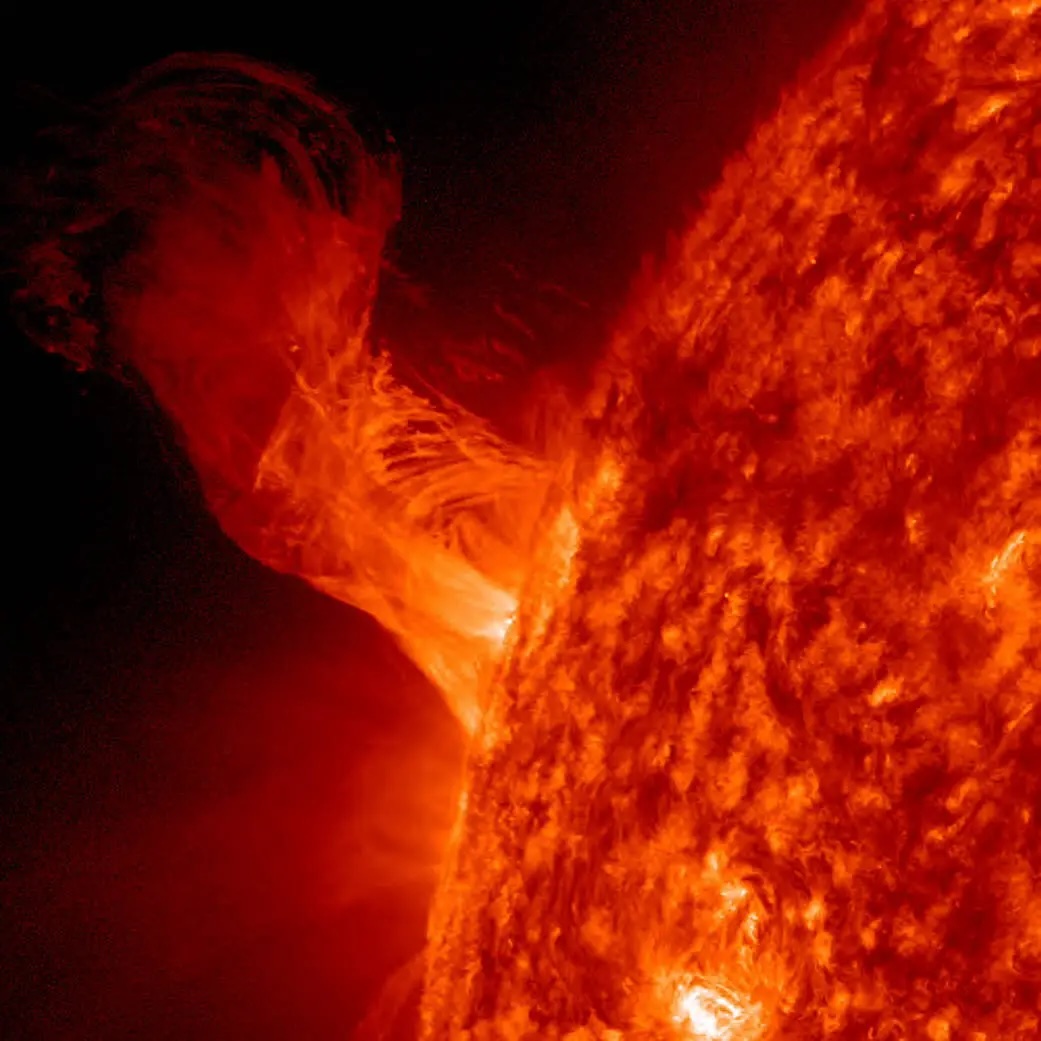
A study by Kou et al. presents the first spatially resolved microwave imaging spectroscopy of the precursor phase of a major solar eruption. The findings reveal that thermal electron emissions dominate during the slow-rise phase, supporting a scenario of moderate magnetic reconnection prior to the flare’s impulsive onset. [Contributed by Y. Kou; Edited by B. Chen. Posted on August 2, 2025.]
Migrated from MediaWiki page OVSA Science Highlights, latest revision 15270 (2026-04-30T21:03:59Z).